
What Can You Do with a Fabric Structure? 10 Myths About Fabric Structures
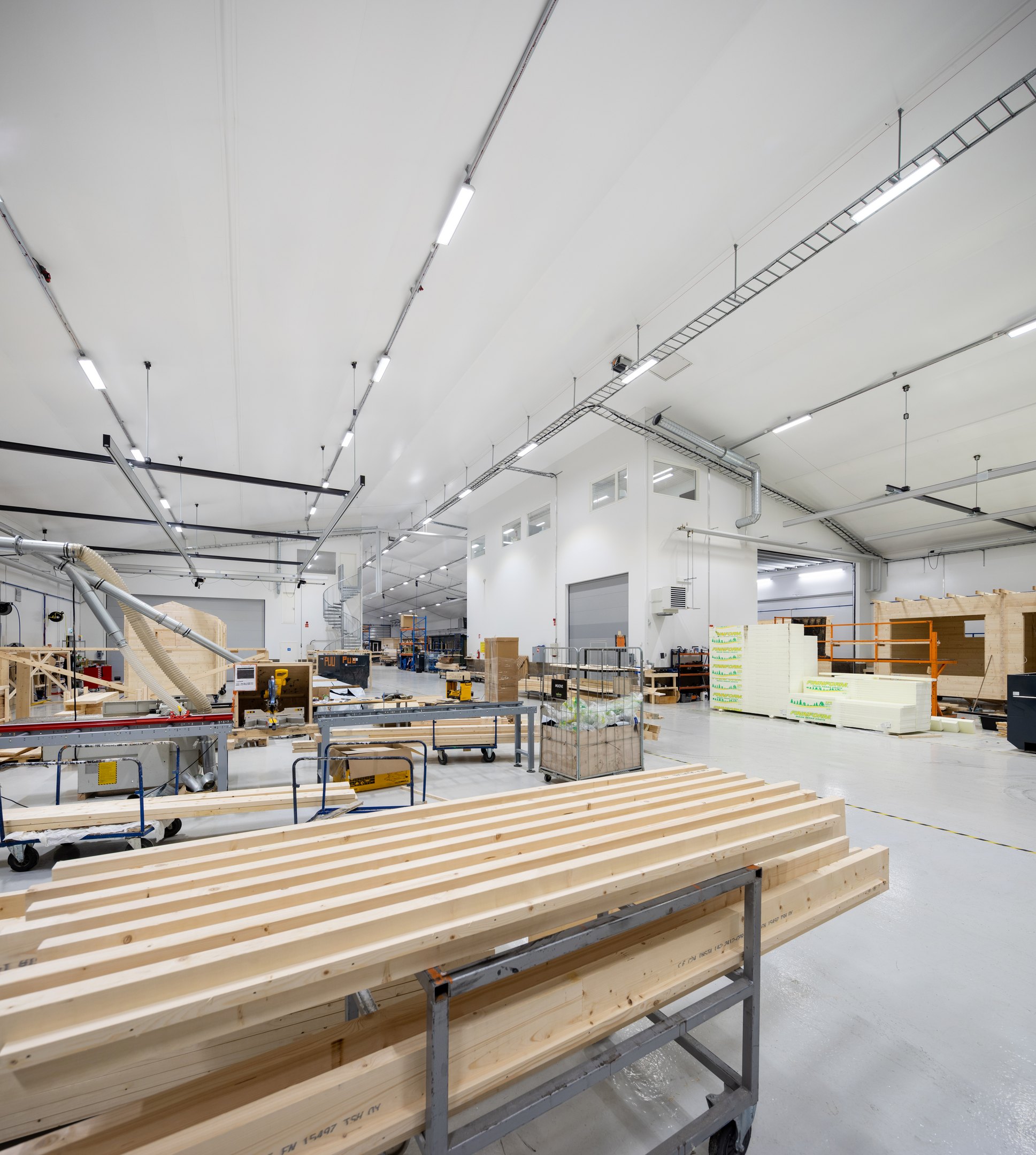
Fabric structures are sometimes thought of as simple storage buildings or additional space. They may be quick to build, but their potential uses are often assumed to be limited.
In reality, a modern fabric-covered production building can be much more than just protection from the weather. When designed around its intended use, it can provide a functional, well-equipped and adaptable space for a wide range of production, storage and logistics needs.
In this article, we take a closer look at some common misconceptions about fabric structures and explain what can actually be achieved with a Best-Hall fabric structure.
Myth 1: A fabric structure is not suitable for efficient production or logistics
Fabric structures are often associated with storage, even though they can also provide highly efficient production space. Many customers are surprised by how well a fabric structure can be designed around the needs of production.
One of the key advantages is the spacious, pillar-free interior. With no internal columns restricting production, the layout can be designed entirely around operational requirements. Machinery, workstations, storage areas, lifting operations, forklift routes and material flows can all be positioned flexibly and efficiently.
This is a major advantage, particularly for companies whose production or logistics operations require large, uninterrupted areas of free space. Internal columns can restrict machinery placement, storage racks, lifting routes and material flows. A pillar-free building provides greater freedom to design an efficient layout.
Myth 2: Cranes cannot be installed in a fabric structure
One common misconception concerns cranes and crane loads. Because fabric structures are considered lightweight buildings, they may be assumed to be unsuitable for the lifting equipment or crane rails required in production.
In reality, cranes can be incorporated into a fabric structure when they are taken into account from the design stage. The key factors are the type of foundation and ensuring that the steel frame is correctly dimensioned for the required loads.
If, for example, the building has been designed for installation directly on asphalt, cranes cannot simply be added afterwards. However, if crane use is included in the original design and suitable concrete foundations are constructed, cranes and crane rails can also be accommodated.
It is therefore important to understand that cranes are not simply an accessory that can be added later; they are part of the building’s overall structural design. When lifting requirements, loads and operating needs are known in advance, the frame and foundations can be designed accordingly.
Myth 3: A fabric structure cannot have ventilation suitable for production
Another common misconception is that a fabric structure is an enclosed space where effective ventilation cannot be provided. In reality, ventilation using roof exhaust fans can be incorporated into the building design even in an unheated structure.
Ventilation becomes particularly important in production environments. Forklifts may operate inside the building, materials may be handled, and processes may generate heat or dust. There may also simply be a need for consistent air exchange. Ventilation is therefore designed according to the size and use of the building and the required indoor conditions.
Effective ventilation in a fabric structure is not an impossibility – it is a matter of proper design.
Myth 4: A fabric structure is unsuitable for moisture-sensitive materials
Moisture management is critical in many production and storage applications. Steel sheets, timber, technical components, packaging materials and other moisture-sensitive products may require carefully controlled conditions.
A fabric structure can be equipped with a dehumidification system that maintains a consistent humidity level throughout the year. This makes it possible to handle and store materials that are sensitive to moisture or condensation. Steel sheets intended for laser cutting, for example, can be so sensitive to moisture that even water droplets must be avoided. In such applications, a dehumidification system can create dry conditions for material handling and storage.
Not every application, however, requires a completely moisture-free environment. In storage buildings, condensation can also be managed with an inner liner. If necessary, an inner liner can be installed in only part of the building, creating an area suitable for storing more moisture-sensitive products.
The right solution always depends on what is being stored or manufactured and the conditions required by the operation.
Myth 5: A fabric structure is always unheated
Fabric structures are strongly associated with unheated storage. Many customers are therefore surprised to learn that they can also be designed as semi-heated or fully heated buildings.
The entire building can be insulated, or it can be divided into separate areas with different temperature conditions. This is often important in production environments, as not every operation necessarily requires the same temperature. Production, storage, packaging, maintenance and technical spaces may all have different requirements.
A fabric structure can therefore be unheated, semi-heated or heated. The appropriate solution is selected according to its intended use.
Heating and insulation should be considered as part of the overall design. Once the work carried out in the building, the products stored there and the required temperatures are known, the building can be designed as a practical and energy-efficient solution.
Myth 6: A fabric structure is just one large open space
A spacious, pillar-free interior is one of the major advantages of a fabric structure, but that does not mean the entire building has to remain one undivided space. If required, partition walls can be used to divide it into smaller areas.
This makes it possible to accommodate different functions within the same building. One section could be used for production, another for storage and a third for packaging, maintenance or technical facilities. The space can also be divided so that different users or operations occupy separate sections.
This makes a fabric structure a highly versatile solution. It can be designed to meet current requirements while also allowing for future changes. Partition walls are particularly useful when different areas require different temperatures, conditions or uses.
Myth 7: Proper building services cannot be installed in a fabric structure
Customers often ask how equipment can be attached to a fabric structure or how building services can be installed. The initial assumption may be that everything needs to be attached to the fabric itself. In reality, equipment is attached to the building’s steel frame, not the PVC-coated fabric. Where necessary, systems can be routed through the fabric using purpose-designed penetrations.
For ventilation, for example, penetrations can be provided for roof exhaust fans and other necessary systems. Lighting, technical equipment and other solutions required for the building’s operation are also designed as part of the overall structure.
The important point is to take penetrations, attachment points and building services into account during the design phase. This allows them to be integrated into the building correctly and safely.
Myth 8: Weather conditions cannot be properly managed with a fabric structure
Buildings need to withstand changing conditions including snow, rain, wind, freezing temperatures and temperature fluctuations. Managing weather conditions is therefore an essential part of fabric structure design.
A building can be equipped with features such as snow barriers, snow and water guides, door canopies, gutters and downpipes. These solutions allow snow and rainwater to be directed away from the roof, doorways and access areas in a controlled manner.
This is important for both usability and safety. Entrances, loading areas and the areas alongside the building can be designed to prevent snow and water from causing unnecessary risks or disruptions to operations.
A fabric structure is not at the mercy of the weather. It is dimensioned and equipped according to the conditions at its intended location.
Myth 9: Fabric structures all look the same
There are outdated perceptions about the appearance of fabric structures. Some people assume that they have to be white or that they always look like temporary buildings.
In reality, the appearance of a fabric structure can be designed to complement a company’s visual identity. Several fabric colours are available, and neither the roof nor the walls have to be white.
The fabric surface can also be used for printed elements such as logos or other visual branding, allowing the building itself to reinforce the company’s identity and brand image.
10. Myth: Fast construction means a short-lived compromise
The short delivery time and fast assembly of fabric structures can sometimes create the impression that they are temporary or short-term solutions. In reality, speed does not mean compromising on durability or suitability for the intended use.
Best-Hall fabric structures are designed according to the conditions at their location and the customer’s requirements. The steel frame, foundations, doors, ventilation, insulation, lighting and other equipment are considered as an integrated whole.
Many customers are surprised by just how long a fabric structure can last. When properly designed, built and maintained, it can remain in use for decades. At the end of the fabric cover’s service life, replacing the cover can extend the building’s useful life by decades again.
A fabric-covered production building designed around your operations
A fabric-covered production building is not an off-the-shelf solution that forces the customer to adapt their operations to the building. At its best, it is designed around production requirements, taking into account the size and layout of the space, foundations, lifting operations, doors, indoor conditions, ventilation, lighting, safety and potential future modifications.
That is why fabric structures should not be judged based on outdated assumptions. When properly designed, they can offer far more possibilities than many people expect.
Do you need production, storage or logistics space that can adapt to the requirements of your operations? Best-Hall’s experts can help you determine the right building solution for your specific needs. Find our contact details here.